THE PUCKISH SPRITES OF ATALAV
Piksies are an abundant and commonly seen mischievous insect, encountered across all corners of Atalav.
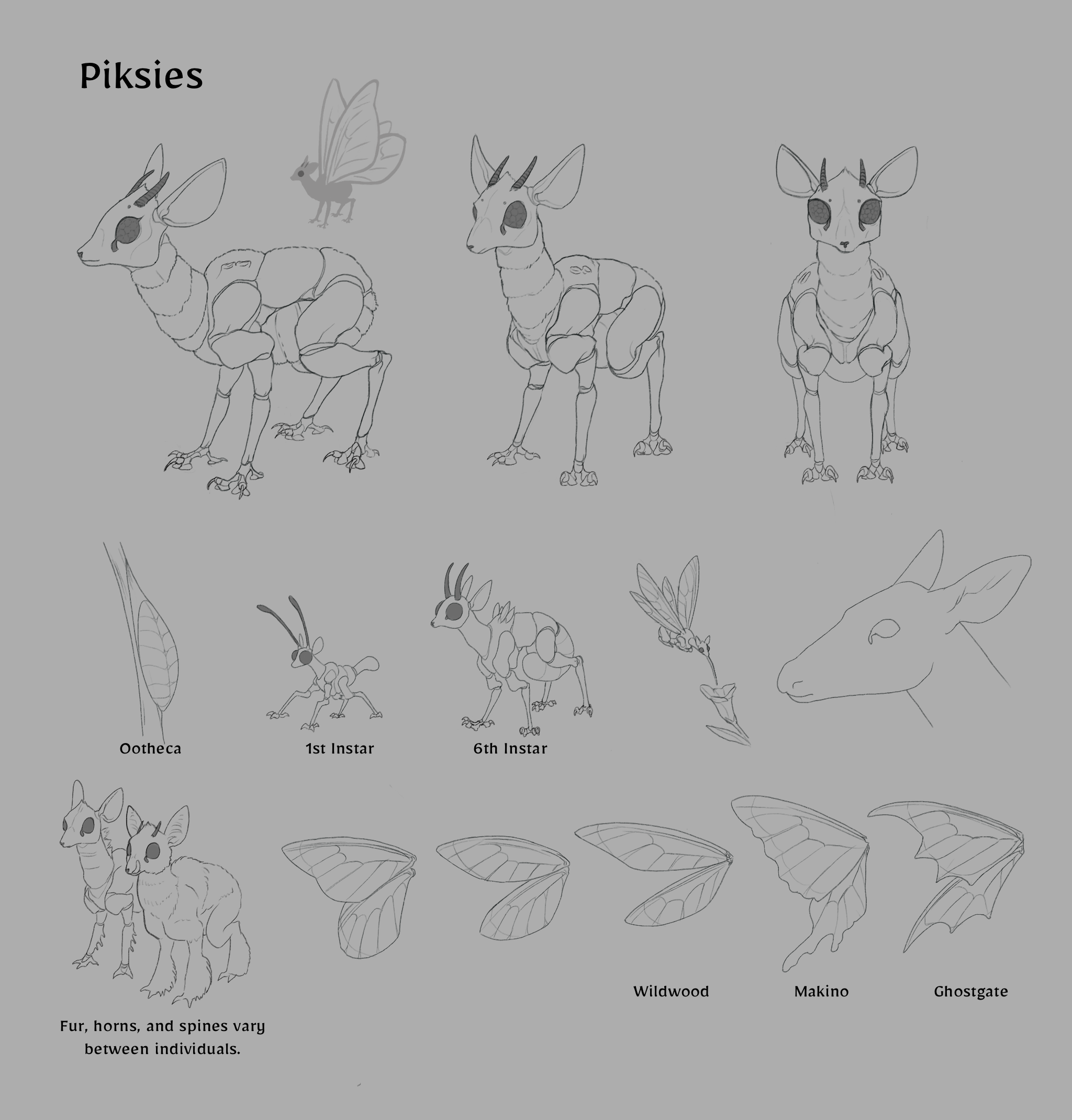
Wide-ranging in coloration, form, and even ecological niche, the Piksie is the most well-known primary and secondary consumer, filling large swaths of habitat needs. From the delicate and ethereal subspecies found in Makino to the highly aggressive and territorial Wildwood variety, just about every area of Atalav is not only familiar with the Piksie, but has created a unique relationship with them.
IMP-POSSIBLY SMALL PROPORTIONS
Piksies get their names from a distorted etymological game of telephone that no one in Atalav would be able to source the origin of at this point. Definitively insects, the strange Piksie has evolved over time to look similar to the apex species on the planet; the Faunid. There are a lot of theories over why this mimicry came to be, but most agree that it makes them so darn cute. For this reason, once upon a time, they were compared to a small, deer-like antelope called Dik-Diks. Because of their fairy-like and mischievous nature, however, the comparison to pixies- small mythological sprites- also began to emerge. The names entwined, granting us the Piksie.
The Piksie is a small insect that has mastered the art of mimicry. All Piksies resemble, in part, their Faunid counterparts. Each region’s specific subspecies have also evolved to look similar to the other insects in the area, creating a unique blend of multi-layered camouflage.
Wildwood Piksies are elusive, aloof, and highly aggressive when disturbed. No Piksie is truly venomous, but their claws contain specialized hypodermic structures that can draw poisonous saps and fluids from the plants in the forest. The sharp tips of their claws have microscopic barbs that allow the thin structures to break off into an individual's skin.
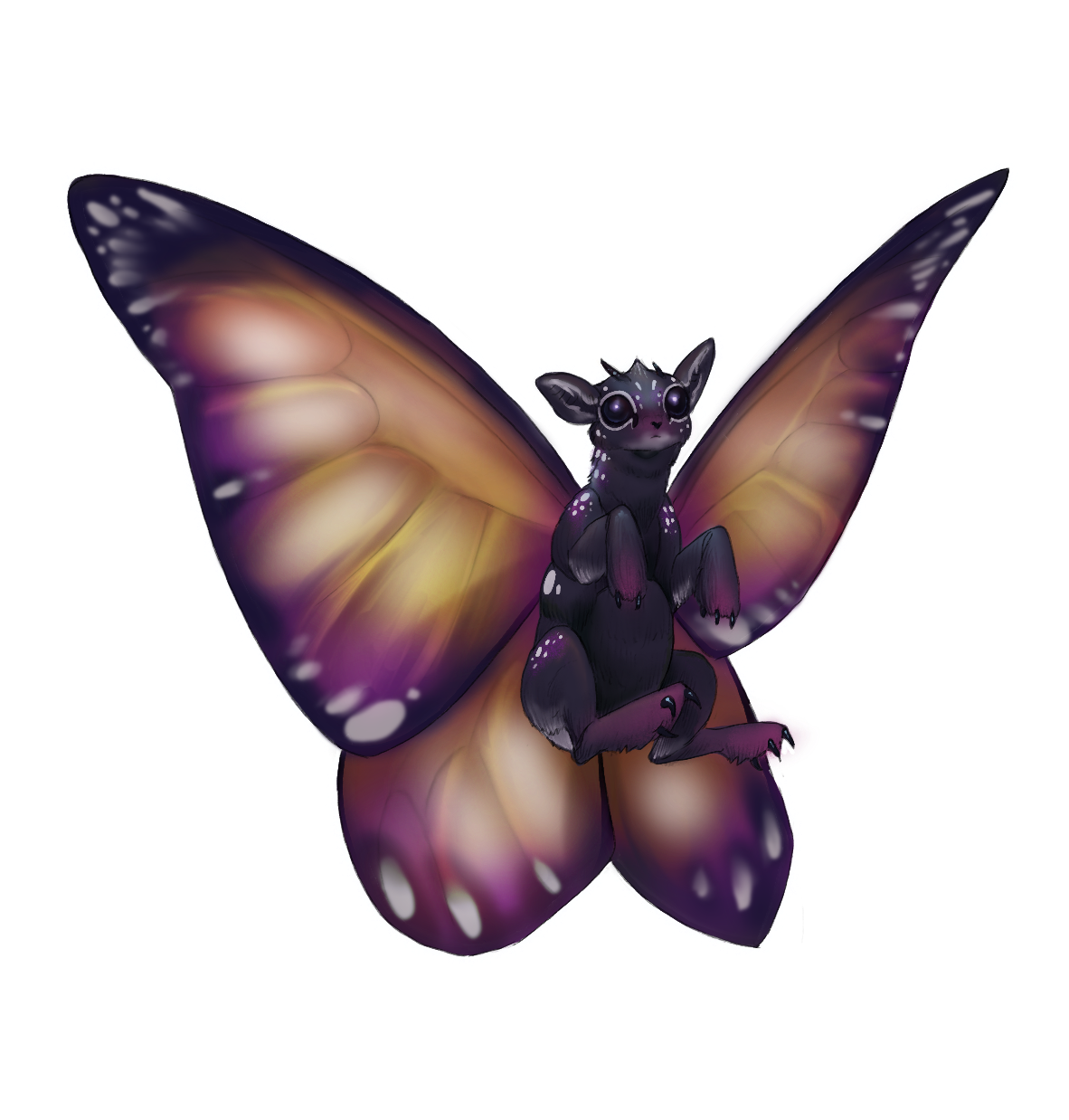
Makino Piksies are much more tame by comparison, and rarely do their claws contain any poisonous fluids. This population is noted as having especially large, ornate, and vibrant wings. This variation tends to cohabitate within city-limits, and are even sometimes considered pests.
A TRUE COSMOPOLITAN
According to ancient literature, the original population of wild Piksies formed in the Wildwood, around Herne's great tree. From there, a second population was established in Makino by travelling faunids. It wasn’t long before Piksies could be found in every established region of Atalav.
Pixies can and do bond readily with Faunids. If a Faunid bonds with a Piksie before their final molt, the wing shape and color of the Piksie might change in ways that reflect their bonded Faunid, a physical reminder that their evolution mirrors Faunids’ own into some strange, seemingly magical connection.
Rural piksies aren’t necessarily immediately tame, however. Being swarmed by an angry colony of Wildwood Piksies is not a pleasant affair. They're known to go for the eyes and the nose.
A GROUP EFFORT
Piksies are naturally colony-oriented, and you’ll rarely find one by itself. It’s said if you find one, there’s a hundred to follow. That said, following a group of Piksies may lead you to other flower-bearing species, or lush clusters of pollinated wildflowers.
In the wild, they form large colonies. While not strictly speaking a proper ‘hive’, these colonies can reach to the hundreds, and tend to form their homes around higher concentrations of Lifesource. Even in desolation, the wellspring of nature's magic takes root.
They’re mischievous and clever; there’s many areas of Atalav that have myths and legends about leaving out small offerings for the Piksies around your home for good luck. Conversely, it’s commonly believed that ignoring a Piksie in need can bring bad luck.
A colony of Piksies that have deemed a Faunid safe may try to move their colony closer to that Faunid’s dwelling. It’s not uncommon for rural farmers to have a colony that they tend to; Piksies that form a relationship with a Faunid may bring them gifts, a perception of good luck, and they are eerily good at defending the territory they live on from predators.