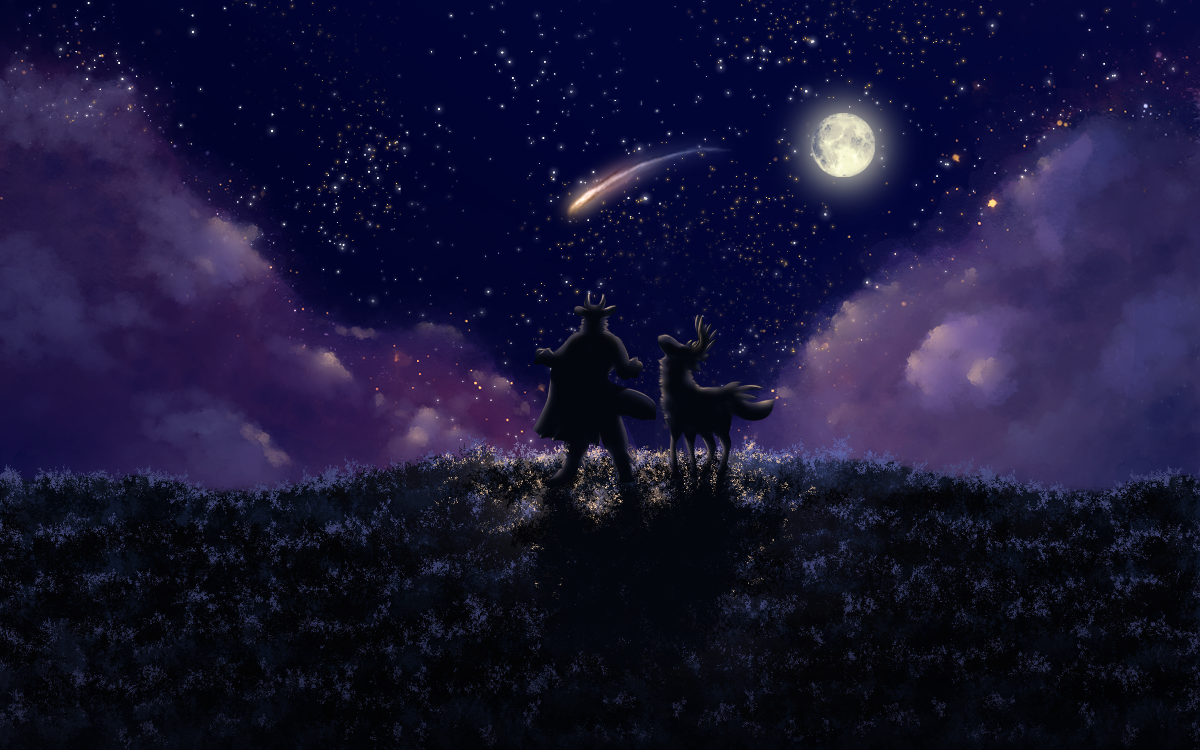
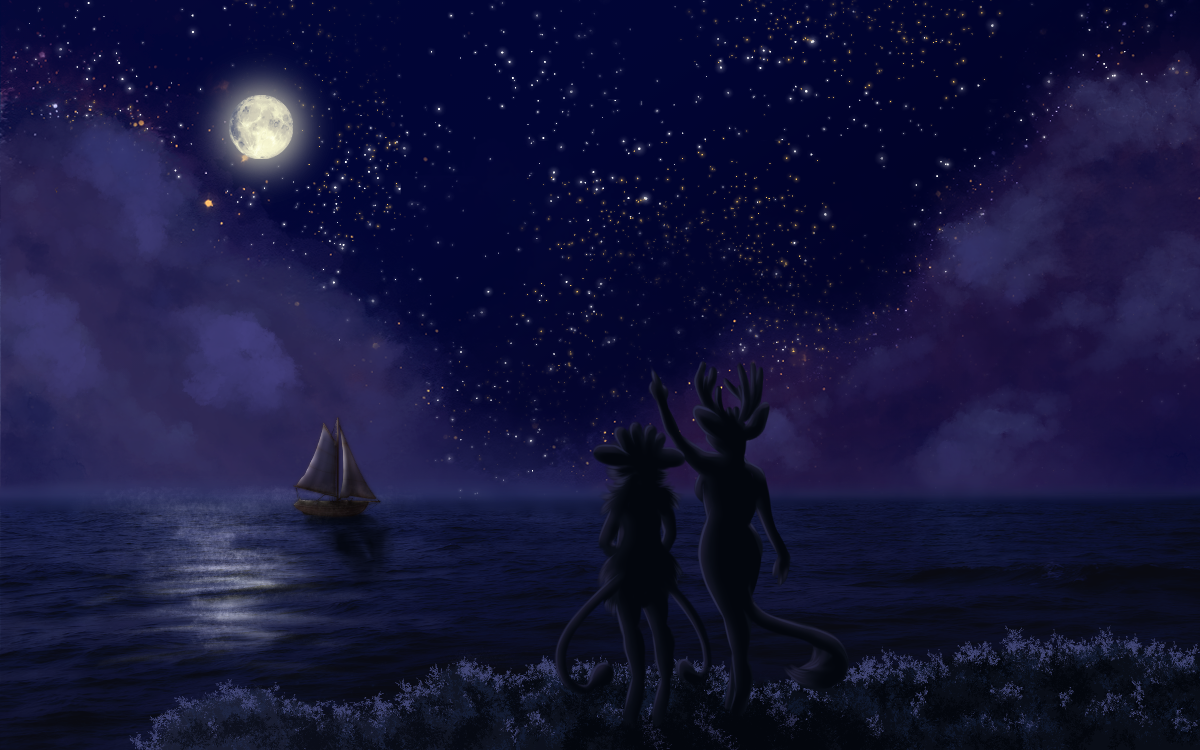
The sky above Atalav contains 12 distinct constellations, each connected and formed from myth, verbal history, legend and folktales.
Each one has a unique story. Some are recognizable throughout the whole year, and some are seasonal warm reminders, harrowing omens, celebratory victories, or cautionary tales to tell to young Fawns and adults alike.
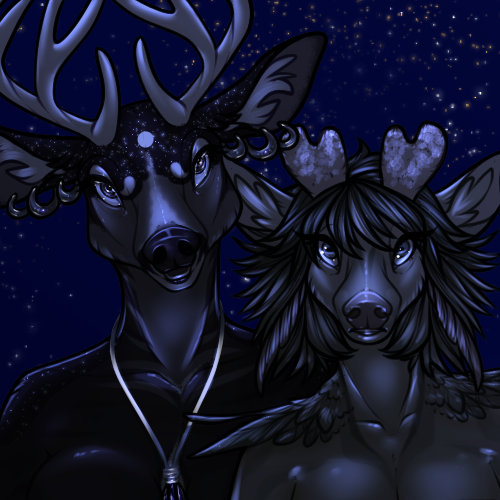
While Faunids as a species devote themselves to the earth they stand on, they have a natural curiosity for the air as well as land and sea. As Faunids seek to understand the world around them, a shared history has emerged under Herne's Graces.
Faunids have attempted to form an understanding of not just the land they inhabit, but the skies beyond them, bridging their own understandings into a framework of the sky that aids in not just storytelling, myth and culture, but also navigation, predictions of weather, accurate measurements of time and seasons.
Faunids inclined towards the arcane have used the constellations as guides in their accumulation of magic to harness their astrological gifts.
Some constellations are more visible during the Winter, Summer, Spring or Autumn, and others seem to behave strangely with weather, darkness, or other seemingly magical constraints.
These 12 constellations, along with the visible planets in the night sky— The Fawn, The Follower, The Lightbearer, The Healer, Firefly, The Moon, The Sun, and The North Star— all serve as the basis of the astrological and astronomical reality that everyone who inhabits Atalav is familiar with.
Though the myths embedded into them may differ from location to location— indeed, Minodae and Merfauns have their own rich histories that intertwine and offer unique perspectives on these stars— these main 12 serve as the established fixtures of the night sky.
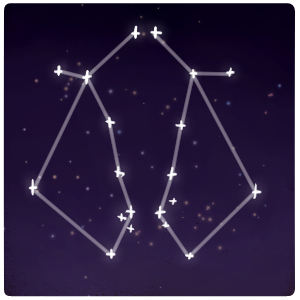
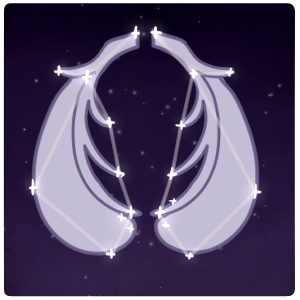
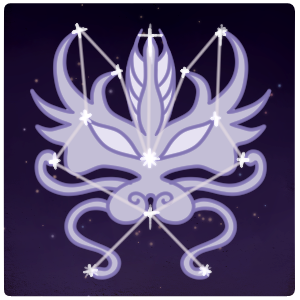
The Loving Lapine
Visible at all times in the night sky, the Loving Lapine is considered by Faunids a gift from Herne, a constant reminder of love-- for each other, for themselves, and for the world around them.
This constellation is the most vivid during Springtide, and theologians speculate that this has culturally shaped the tradition of the festival by its presence.
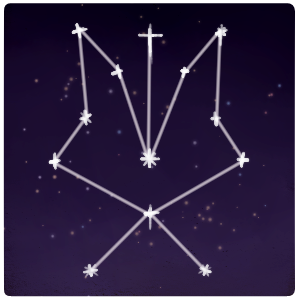
Bounty
Fauns use this constellation for navigation, particularly through the intricate river channels that are found throughout Atalav.
Curiously, following the direction of Bounty is how Fauns can usually find eelcats-- for some unknown reason, perhaps as an old, arcane gift from Herne, eelcats seem to navigate by this constellation themselves. They congregate in waters that are closest to where this constellation touches the horizon.
The Mischief-Maker
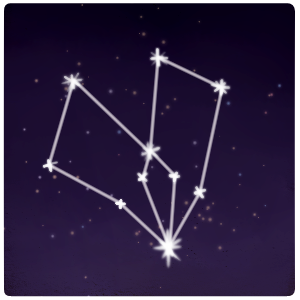
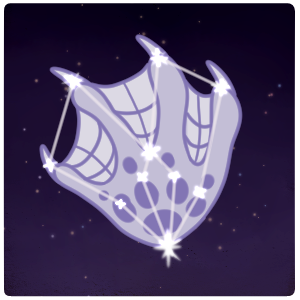
Visible throughout the spring and summer on clear nights, particularly during the New Moon cycle. It takes a truly dark night to see this constellation, but oddly, it's occasionally the only star system visible through the cloudy haze of an overcast sky.
This fickle nature earns it a cultural characterization of being cheeky, elusive, and mischievous. Because of these strange nights where it's the only constellation visible, it can be used as a wayfaring guide in the absence of more typical guiding stars; be careful, though, as folktales warn against following its guidance, lest you find yourself somewhere... a little farther from your destination than you intended.
Hardhead
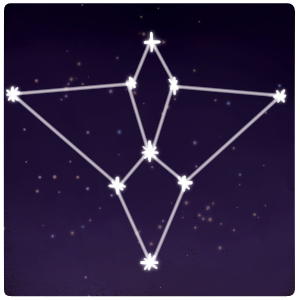
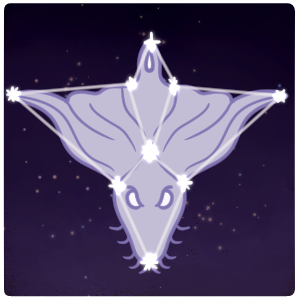
This constellation is brightest before a heavy storm, particularly if it's spotted below a red sky. Sea-travelers often calculate the risk of turbulent weather based on the Hardhead, making it a handy omen.
While this constellation is visible year-round, the visibility of its individual stars are weather-dependent. Parents will often warn their children to come home when the first star in the system becomes visible in the night sky, as it tends to show itself just after sunset.


Exploration
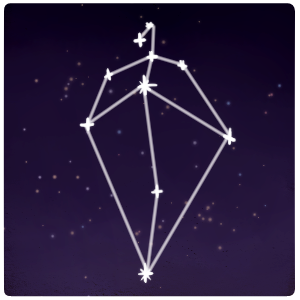
The premier guiding constellation. Travelers all across Atalav see this constellation as a guide to traverse the lands, using it as a natural compass.
Follow this constellation to its heart, and you will find Hernlak, the birthplace of Faunids. With that as a celestial landmark, any travelled Faun can find their way across the continent.
The Living Leaf
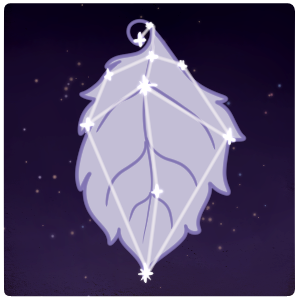
An early harbinger of spring, Fauns often take bets for how early or late spring will arrive by the presence of this constellation, predicting with consistent accuracy.
As it symbolizes the very beginning of spring, The Living Leaf has taken on the meaning of appreciation for life, youth, and health; it's appearance is a sigh of relief after a difficult winter.
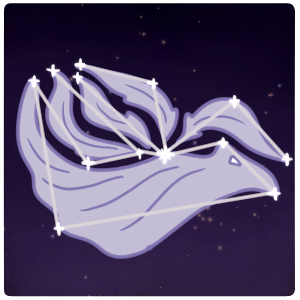
The Shrieker's Nest
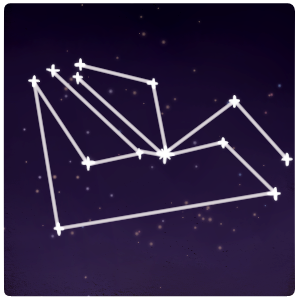
Circumpolar at all times of the year at different altitudes throughout the seasons, the Shrieker's Nest resembles, to some, a shroud for the dead. For others, it is a representation of a nest for infants, symbolizing the scope of life from beginning to end.
A constant companion to the sky, this is often one of the first constellations young Fauns are taught by their parental figures, introducing curiosity and wonder at the sky beyond Atalav.
Devotion
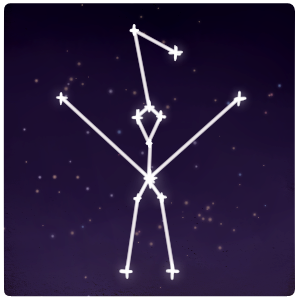
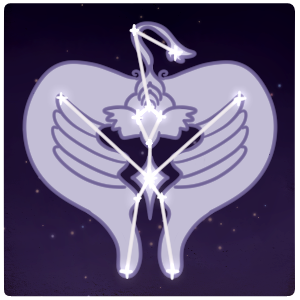
This constellation is brightest at the tail end of Autumn and the Winter months that follow.
It provides a harrowing reminder that even in times of hardship, Faunids must take care of one another and share, especially when resources are thin. Through Devotion of Herne and her gifts, even the coldest of times will see Spring.
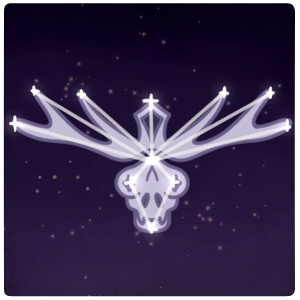
Loss
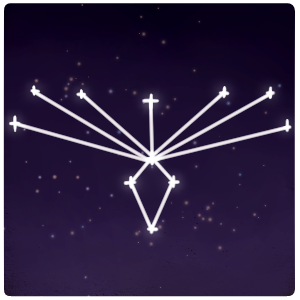
This profoundly melancholy constellation is brightest near the Winter solstice, when the atmosphere is heavy and sickly with poor air quality.
It serves as a reminder of the state of the world before the Blissen, as well as what was lost. It shines just above the horizon, staring like a watcher in the standstill of winter to remind us of our duty to heal the land as one.
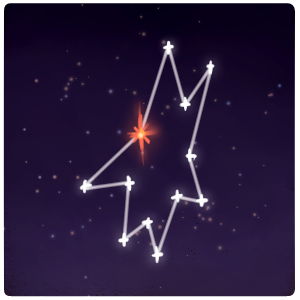

The Howler and the Red Star
Some Faunids in remote wastelands tell stories about the Howler, with some even claiming to have seen it: a misshapen creature stretched tall and calling out a mournful song at the top of a mountain in the distance, as if searching for something.
The Red Star, which is the Northern most star of this system, glows brightest in places where few other stars can be seen. Faunids consider the visibility of the Red Star as an omen that Corrupts are near, and indeed, Corrupts seem to be drawn to this constellation and its lonely Red Star.
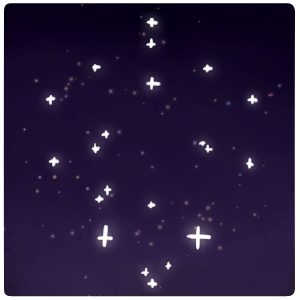
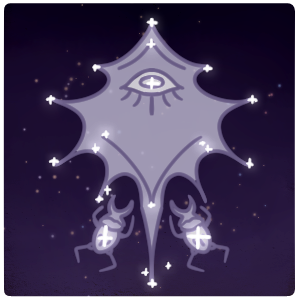
The Uncertain Cluster
Visible most vibrantly through the Spring and Summer months, this cluster of stars is usually depicted as two Runeback Beetles seeking out the mysteries of Herne.
Not everything in Atalav is as simple as material truth-- some things, in Herne's vision, are unknown, esoteric, and full of secretive magic. Mystics and occultists tend to utilize this constellation and its visual forms to signal to each other, using either the strange eye or the beetles.
Lifesource
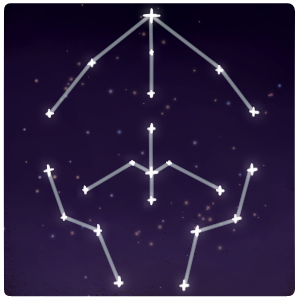
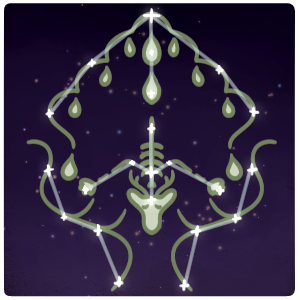
This constellation is most visible in the fading weeks of Summer, but can be seen crawling through the sky throughout the year. Of all the constellations in Atalav, this one is spoken about with the most hushed tones, something sorrowful and guilty creeping into every Faun who dares to mention it.
The skeletal form of the Faunid in its depictions is often the first real fright that Fawns experience as they flip through bedtime stories. The strange, sickly rain falling down it seems to unnerve those old enough to understand something horrible produced this imagery.
It's unknown exactly what it depicts, but most scholars seem to agree that the Lifesource Constellation shows, yes, the emergence of Lifesource in Atalav, but it is also the starkest reminder of the Blissen in our living history.
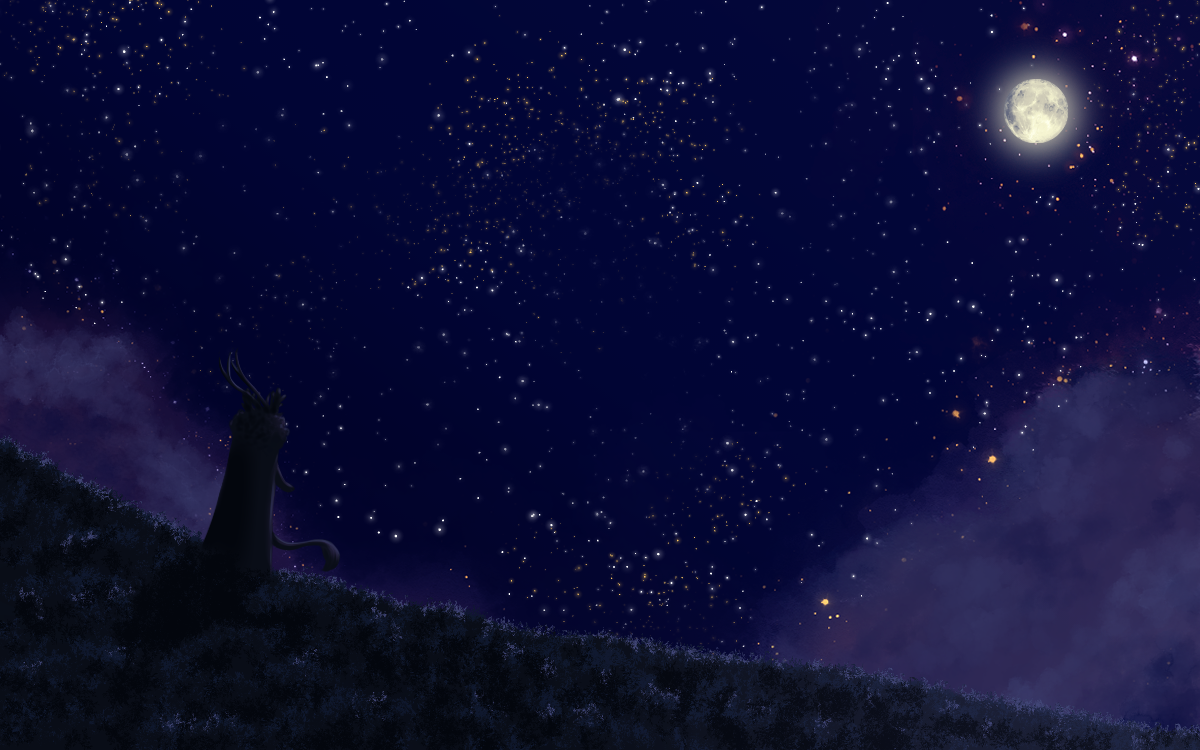
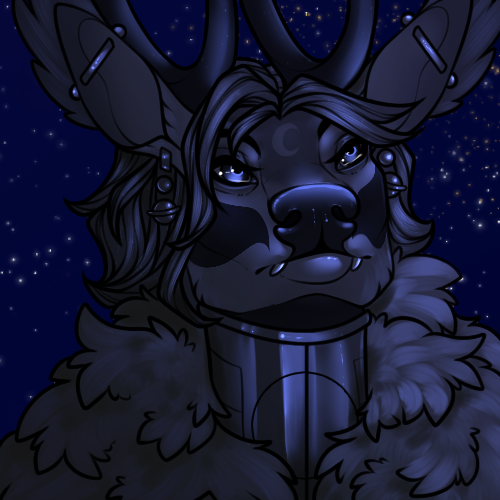
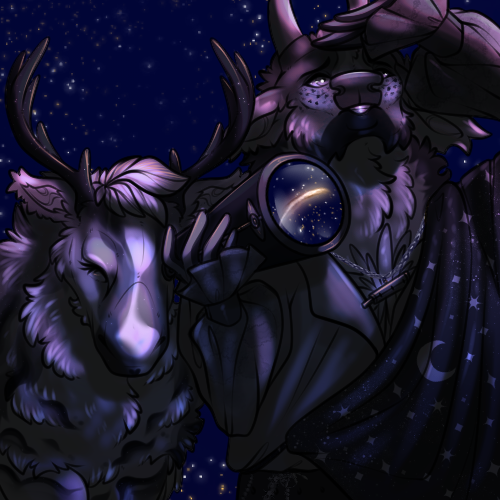
Something new has appeared in our sky.